

What is a DWI? (Definition + Consequences in 2026)
What is a DWI? A DWI applies to drivers caught behind the wheel with a blood alcohol content (BAC) level of .08% (.05% in Utah). Following a DWI, you might lose your driver's license and face criminal charges depending on the laws in your state. Your auto insurance rates will also increase with a DWI charge on your record.
Read more





Find the Lowest Car Insurance Rates Today
Drivers have found rates as low as $42/month in the last few days!




Table of Contents
Table of Contents

Farmers CSR for 4 Years
Leslie Kasperowicz holds a BA in Social Sciences from the University of Winnipeg. She spent several years as a Farmers Insurance CSR, gaining a solid understanding of insurance products including home, life, auto, and commercial and working directly with insurance customers to understand their needs. She has since used that knowledge in her more than ten years as a writer, largely in the insuranc...
Leslie Kasperowicz

Licensed Insurance Producer
Dani Best has been a licensed insurance producer for nearly 10 years. Dani began her insurance career in a sales role with State Farm in 2014. During her time in sales, she graduated with her Bachelors in Psychology from Capella University and is currently earning her Masters in Marriage and Family Therapy. Since 2014, Dani has held and maintains licenses in Life, Disability, Property, and Casualt...
Dani Best
Updated December 2024
What is a DWI? DWI stands for “Driving While Intoxicated.” The DWI meaning is applied only to intoxication by alcohol, unlike a DUI, which applies to drivers under the influence of drugs and alcohol.
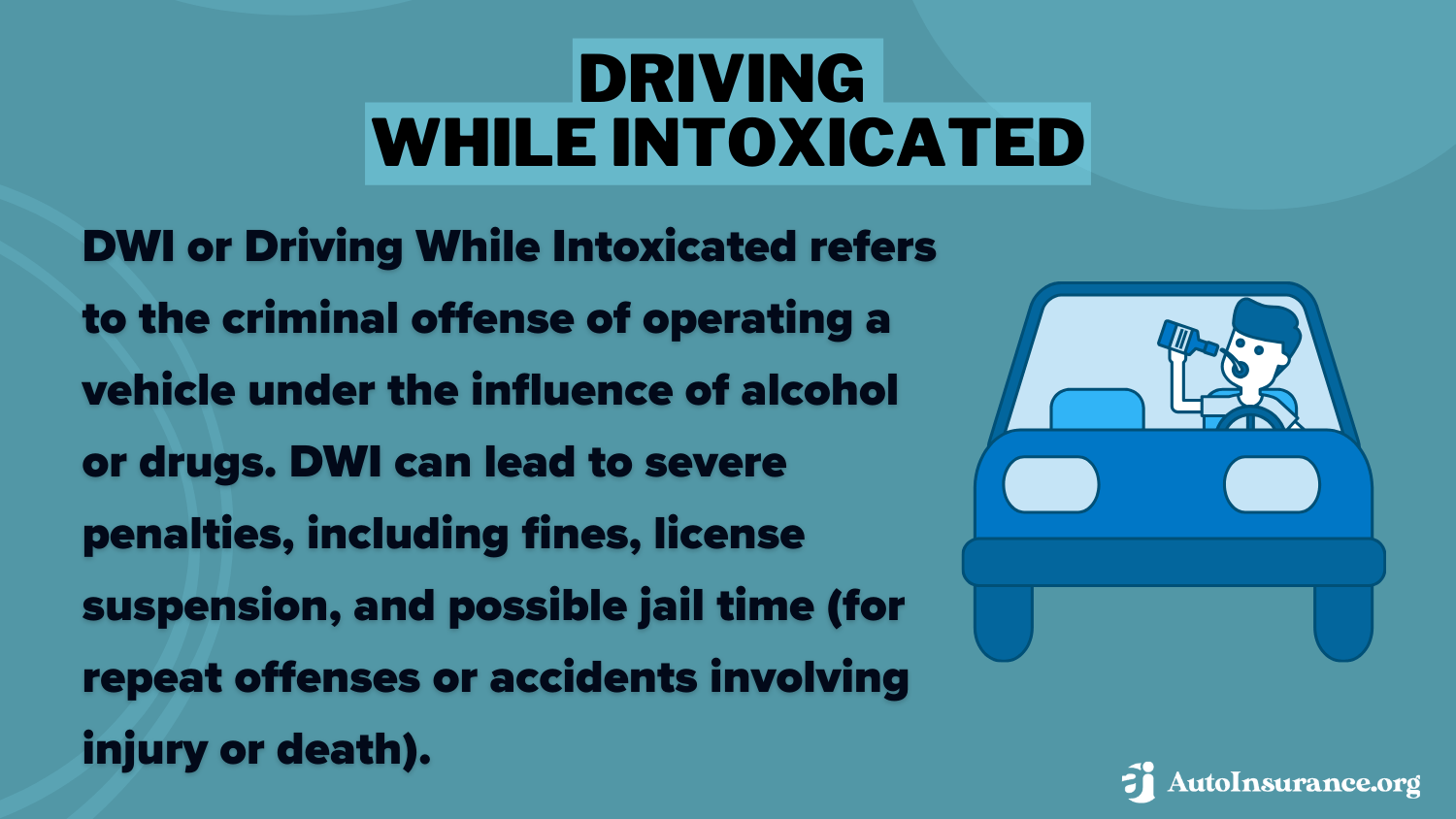
You will be charged with a DWI if you’re caught behind the wheel with a blood alcohol content (BAC) of .08% or higher. If you have a DWI on your driving record, you can expect your auto insurance rates to increase. Learn the key DWI vs. DUI differences.
Ready to compare high-risk auto insurance companies for free? Enter your ZIP code above to start comparing auto insurance quotes today.
- DWI applies with a BAC level of .08% (.05% in Utah)
- DWI leads to criminal charges and increased insurance rates
- SR-22 insurance is often required for DWI offenders
Understanding the Meaning of a DWI
What does a DWI mean? DWI refers to a drunk driving offense, which means “driving while intoxicated.” Facing DWI charges means your BAC was .08%, and you were legally drunk while driving.
What does DWI mean in law? In law, DWI has two meanings: administrative and criminal. DWI still means “driving while intoxicated,” but how this definition is handled is very different.
First, the administrative DWI meaning applies to your driver’s license. In this case, DWI means you will lose your license. For example, failing or refusing to take a breathalyzer or chemical sobriety test for DWI will automatically result in a loss of license.
How much do you know about #DUI‘s? Laws are constantly changing, and it’s important to stay informed. Check out this guide to learn what you need to about the latest DUI legal and insurance penalties! ➡️ https://t.co/jJPtu9EoZc #DrunkDriving #Laws #Driving 🚙 pic.twitter.com/04RMvNxlxc
— AutoInsurance.org (@AutoInsurance) June 7, 2021
Second, the criminal definition of DWI applies to the legal consequences of the charge. In this case, DWI could mean going to jail or paying a fine. Criminal definitions of DWI can vary by state, but you could face felony charges if you have more than one DWI. Learn what a DUI is along with its implications.
Differences Between DWI and DUI
The difference between DWI and DUI rests mainly with the criminal definition. Drivers will lose their licenses with either a DUI or DWI charge but face different criminal repercussions depending on what substances are in their systems at the time of arrest.
In this case, the DWI meaning applies only to alcohol intoxication, while DUI refers to drug or alcohol intoxication or a combination of the two.
Depending on your state, you may face both DWI and criminal drug charges if charged with a DUI. However, some states use DUI and DWI interchangeably.
So, if you’re facing charges for driving while intoxicated, get in touch with a lawyer who can help you better understand the auto insurance laws in your state and the legal options available to you.
Free Insurance Comparison
Compare Quotes From Top Companies and Save
The Impact of a DWI on Auto Insurance
Once you’re charged with a DWI, you cannot reinstate your license or legally drive again until you file an SR-22 auto insurance form with your local DMV. The SR-22 proves that you carry the minimum levels of car insurance to drive after license revocation.
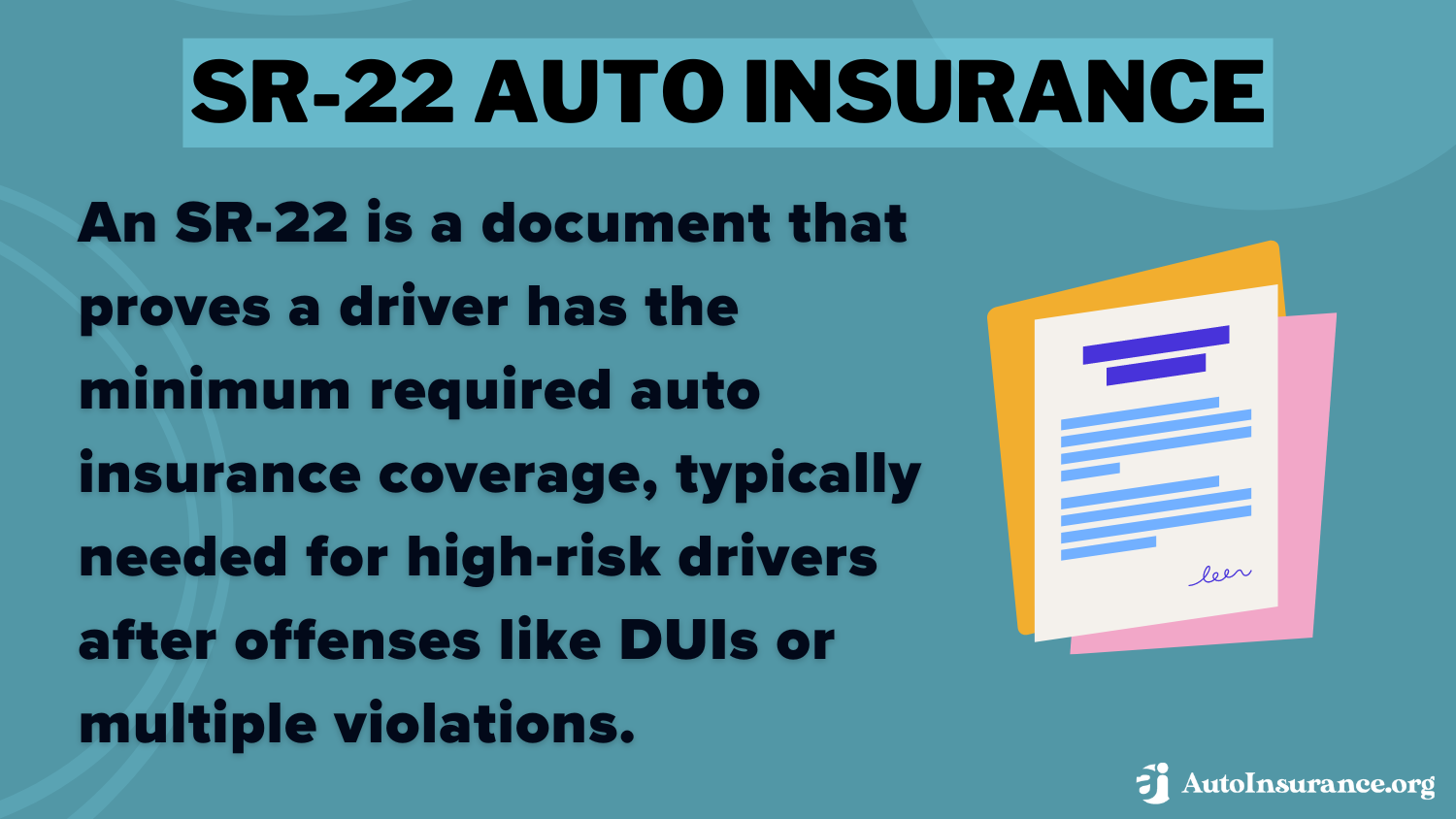
Filing SR-22 moves you into the high-risk category for auto insurance. High-risk drivers pay more than double the standard rates for car insurance, and DUI insurance rates are some of the most expensive. This table shows how DWI auto insurance rates compare to other driving-related offenses:
Auto Insurance Average Rate Increase by Driving Violation
Driving Violation Monthly Rates Average Rate Increase Percentages
Clean Record $155 N/A
DUI/DWI
First Offense (3-5 Years)$168 8%
Cell Phone/Texting $176 13%
Speeding (Less Than 20 Mph Over) $176 13%
Speeding (More Than 20 Over) $176 13%
At-Fault Accident $197 27%
Reckless Driving $197 27%
Hit And Run $197 27%
DUI/DWI
(12-24 Months)$197 27%
DUI/DWI
Second Offense (3-5 Years)N/A N/A
Along with expensive rates, DWIs can stay on your record for five years or more. This means that auto insurance companies that look back further than three years will continue to charge you for high-risk auto insurance.
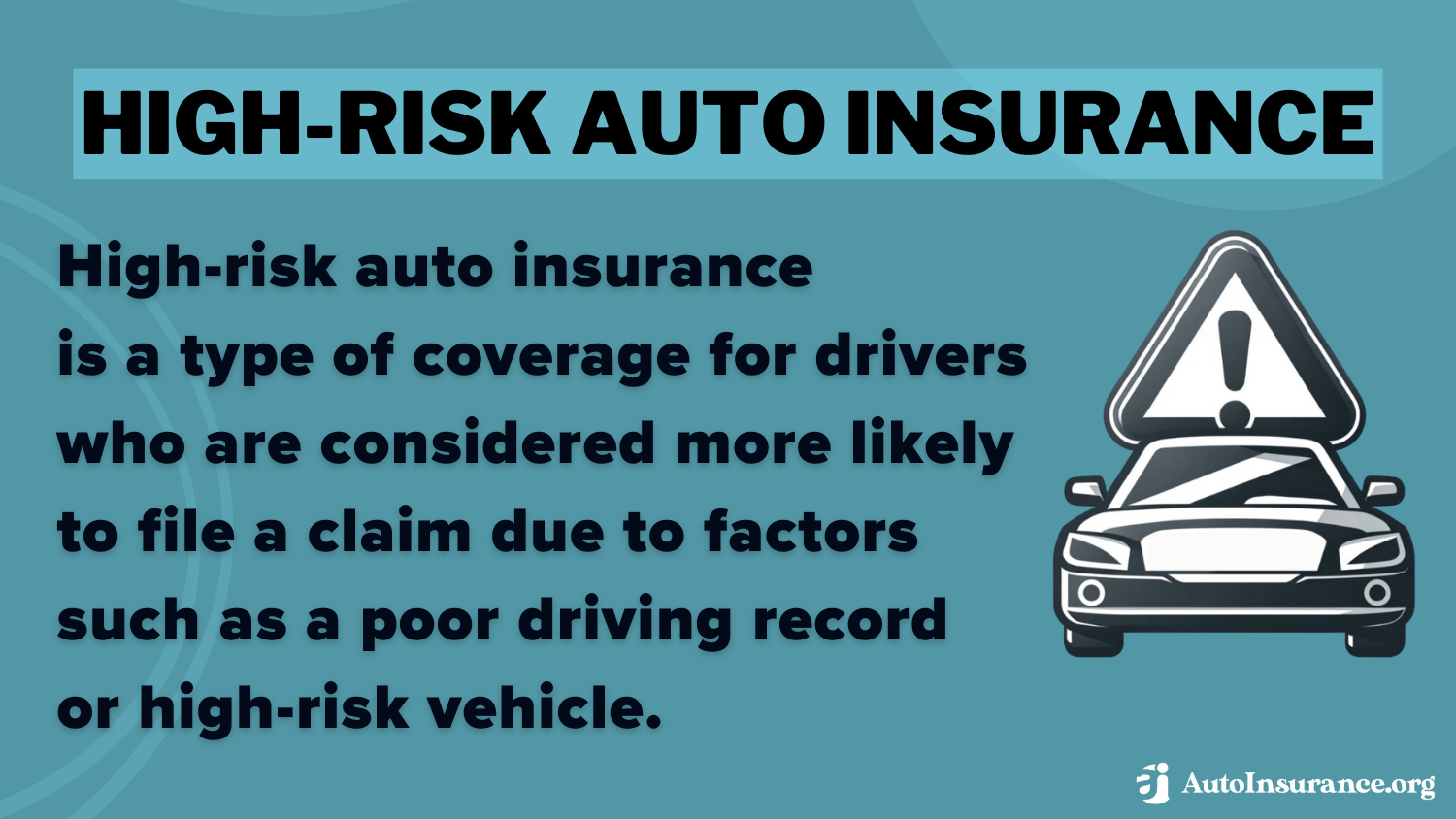
Is cheap auto insurance with a DWI possible? However, reinstating your license after a DWI is long and expensive. It will be a few years before you start to see your auto insurance rates drop. So, get quotes from at least three high-risk insurers to ensure you don’t overpay for coverage.
Consequences of Receiving a DWI
If the police stop you for suspected drunk driving, the officer will ask you to take a breathalyzer or blood sobriety test. It is your right to refuse a field sobriety test.
A BAC of .08% is the legal threshold for a DWI in most states.Jeff Root Licensed Insurance Agent
However, you will automatically lose your license and be arrested. The police will then test your BAC at the police station to prove whether you were intoxicated, and you will be charged with a DWI offense.
DWI Offense Explained
Typically, first-time DWI offenses are considered misdemeanors. However, multiple DWI offenses or a DWI charge combined with reckless driving or vehicular manslaughter may be regarded as a felony. The criminal charges for a DWI vary by state and criminal record. Take a look at the table below to see DWI laws and punishments by state:
Drunk Driving Laws and Penalties by State
State Jail Minimum Fines Minimum License Suspension Ignition Interlock Device Required
Alabama 48 hours $600-$2,100 90 days Yes
Alaska 3 days $1,500-$3,000 90 days Yes
Arizona 24 hours $250-$2,500 90 days Yes
Arkansas 24 hours to 1 year $150-$1,000 6 months Yes
California 4 days to 6 months $390-$1,000 6 months Yes, in some counties
Colorado 5 days to up to 1 year (DUI), or up to 180 days (DWAI) $600-$1,000 9 months Yes
Connecticut 2 days up to 6 months $500-$1,000 45 days Yes
Delaware Max. 6 months $500-$1,500 12 months Yes
District of Columbia Max 90 days $300-$1,000 6 months Yes
Florida 6 to 9 months $500-$2,000 6 months Yes
Georgia 24 hours to 1 year $300-$1,000 1 year Yes
Hawaii 48 hours $150-$1,000 1 year Yes
Idaho Up to 6 months $1,000-$2,000 90 days Yes
Illinois Up to 1 year $500-$2,500 1 year Yes
Indiana 60 days to 1 year $500-$5,000 90 days Yes
Iowa 48 hours $625-$1,250 180 days Yes, if BAC .15 or higher
Kansas 48 hours $750-$1,000 30 days Yes
Kentucky None $200-$500 30-120 days Yes
Louisiana 2 days to 6 months $300-$1,000 90 days Yes
Maine 48 hours to up to 30 days $500-$2,000 150 days Yes
Maryland Up to 1 year (DUI); up to 2 months (DWI) $1,000-$4,000 6 months Yes
Massachusetts Up to 30 months $500-$5,000 1 year Yes
Michigan Up to 93 days $100-$500 6 months Yes
Minnesota 48 hours up to 90 days $1,000-$3,000 90 days Yes
Mississippi Up to 48 hours $250-$1,000 90 days Yes
Missouri 48 hours up to 6 months $500-$5,000 30 days-1 year Yes
Montana 24 hours to 6 months $600-$1,000 6 months Yes
Nebraska 7 to 60 days $500-$1,000 6-18 months Yes
Nevada 2 days to 6 months $400-$1,000 90 days Yes
New Hampshire 7 days $500-$1,200 9 months Yes
New Jersey 12 hours up to 30 days $250-$500 3 months Yes
New Mexico Up to 90 days $300-$500 6 months Yes
New York None $500-$1,000 6 months Yes
North Carolina 24 hours $200-$10,000 1 year Yes
North Dakota 24 hours (for level 5 offender) (however, if 3 aggravated factors are present -- Level 1A -- minimum of 12 months) $500-$2,000 91 days Yes
Ohio 3 days to 6 months $375-$1,075 6 months Yes
Oklahoma 5 days to 1 year $100-$1,000 180 days Yes
Oregon 48 hours or 80 hours community services $1,000-$6,250 1 year Yes
Pennsylvania None $300-$5,000 1 year Yes, if refusal to take chemical test
Rhode Island Up to 1 year $100-$500 1-2 years Yes
South Carolina 48 hours to 90 days $400-$6,300 6 months Yes
South Dakota 2 days up to 1 year $1,000-$2,000 30 days Yes
Tennessee 48 hours up to 11 months $350-$1,500 1 year Yes
Texas 3 to 180 days $2,000-$10,000 90 days-2 years Yes
Utah 48 hours $700-$1,500 120 days Yes
Vermont Up to 2 years $750-$1,500 90 days Yes
Virginia 5 days $250-$2,500 1 year Yes, if BAC .15 or higher
Washington 24 hours to 1 year $550-$5,200 90 days Yes
West Virginia 1 day Up to 6 months $100-$500 15-45 days Yes
Wisconsin None $150-$300 6-9 months Yes
Wyoming Up to 6 months $750-$3,000 90 days Yes, if BAC .15 or higher
No matter where you live, DWI offenses almost always result in license revocation. However, jail time and fines vary widely.
Understanding a Medical DWI Charge
Along with the DMV and the judicial system, the state medical board can also punish and restrict medical professionals facing DWI charges. For example, state boards often require mandatory drug and alcohol treatment for doctors and nurses before returning to practice.
Even if your driving record is less than clean, you may be able to find affordable🫰 insurance rates. Check out🔎 our list of the top🔟 insurance providers for drivers with a DUI👉: https://t.co/ZsvoYhkalU pic.twitter.com/4ZJtLdZrcR
— AutoInsurance.org (@AutoInsurance) July 6, 2024
If charges involve multiple DWIs, or if the DWI directly relates to their practice of medicine, they could lose their medical licenses. However, these restrictions apply when a medical professional faces any criminal charge, not just DWI. Discover where to find cheap auto insurance after a DUI here.
DWI Meaning: What You Need To Know
While the definition of DWI varies slightly from state to state, the slang meaning is simply “drunk driving.” In most states, DWI is an acronym that stands for “Driving While Intoxicated” and refers specifically to alcohol intoxication. If applicable, the law will differentiate DUI by defining it as drug and alcohol intoxication.
The DWI meaning and DUI definition are synonymous in terms of auto insurance — your auto insurance rates will go up either way. Insurance companies will consider you a high-risk driver and charge you accordingly.
However, the way in which DWI impacts your rates differs for every auto insurance company. Before you buy auto insurance coverage, shop with insurers who cater to high-risk drivers to find the most affordable rates. Enter your ZIP code now to compare free quotes from affordable, high-risk auto insurance companies near you.
Frequently Asked Questions
What does DWI mean?
DWI stands for Driving While Intoxicated, typically referring to operating a vehicle with a blood alcohol content (BAC) of .08% or higher. Understand what an alcohol detection systems mandate would mean for reducing DUIs.
What does DWI mean in New York?
In New York, a DWI refers to driving with a BAC of .08% or higher, resulting in legal consequences such as fines, potential jail time, and increased monthly insurance costs.
What should you do if you get a DWI in Texas?
If you get a DWI in Texas, hire a lawyer, prepare for court, and file for SR-22 insurance to reinstate your license.
What are the penalties for a DWI in Texas?
In Texas, penalties for a DWI can include fines, jail time, license suspension, and higher auto insurance rates, often doubling monthly premiums. Explore options for the best auto insurance after a DUI in Texas now.
Do you lose your license after a DWI in New York?
Yes, a DWI in New York typically results in an automatic license suspension for a specific period, depending on the offense.
What are the differences between a DUI and a DWI in New York State?
In New York, a DWI refers to alcohol intoxication, while a DUI can involve impairment from both drugs and alcohol.
What is the 2-hour rule for DWI in New York?
The 2-hour rule in New York allows law enforcement to administer a chemical test within two hours of a DWI arrest to determine BAC. Get the best auto insurance after a DUI in New York and lower your premiums.
What is DWI used for?
DWI is used to classify and prosecute cases where a driver operates a vehicle while legally intoxicated, primarily due to alcohol.
What is the meaning of DUI?
DUI stands for Driving Under the Influence, typically referring to driving while impaired by alcohol, drugs, or a combination of both.
What are the differences between DUI and DWI in Illinois?
In Illinois, DUI and DWI are used interchangeably to describe driving under the influence of drugs or alcohol, though some states distinguish the two terms. Learn how to secure the best auto insurance after a DUI in Illinois here.
Can a DWI be dismissed in Texas?
What is the level of crime for a DWI in Texas?
How long does a DWI stay on your record in New York?
How do I get a DWI off my record in New York?
Can a DWI be dismissed in New York?
Related Articles
-
Oct 2024

How to Cancel MetLife Auto Insurance in 2026 (Follow These 5 Steps)
-
Dec 2024
Does car insurance cover hail damage?
-
Dec 2024
Do you need insurance to test drive a car at the dealership?
-
Dec 2024
Do you need medical payment coverage on auto insurance?
-
Dec 2024
Can I file an insurance claim without a police report?
-
Nov 2024
Non-Owner SR-22 Auto Insurance in 2026 (Coverage Explained)




Get a FREE Quote in Minutes
Insurance rates change constantly — we help you stay ahead by making it easy to compare top options and save.