
What to Do When Your Engine Overheats
An overheating engine is a fairly common problem with cars. Whether it's caused by a minor, fixable problem or something more serious, failing to fix an overheating engine in a timely manner can cause significant damage to your car and cost you more in repairs down the line. Keep an eye out for signs of an overheating engine, like odd smells and smoke. Then, act quickly to get your engine's temperature and avoid damage.
Read more Secured with SHA-256 Encryption





Table of Contents
Table of Contents

Insurance and Finance Writer
Luke Williams is a finance, insurance, real estate, and home improvement expert based in Philadelphia, Pennsylvania, specializing in writing and researching for consumers. He studied finance, economics, and communications at Pennsylvania State University and graduated with a degree in Corporate Communications. His insurance and finance writing has been featured on Spoxor, The Good Men Project...
Luke Williams

Licensed Insurance Agent
Kristen is a licensed insurance agent working in the greater Boston area. She has over 20 years of experience counseling individuals and businesses on which insurance policies best fit their needs and budgets. She knows everyone has their own unique needs and circumstances, and she is passionate about counseling others on which policy is right for them. Licensed in Massachusetts, New Hampshire,...
Kristen Gryglik
Updated October 2024
An overheated engine is one of the most common things that can go wrong with your car. Although the source of the problem might be something relatively minor, like a leak in your car’s cooling system or a broken radiator fan, it can cause serious damage to your car engine and other parts of your car if you don’t get it fixed.
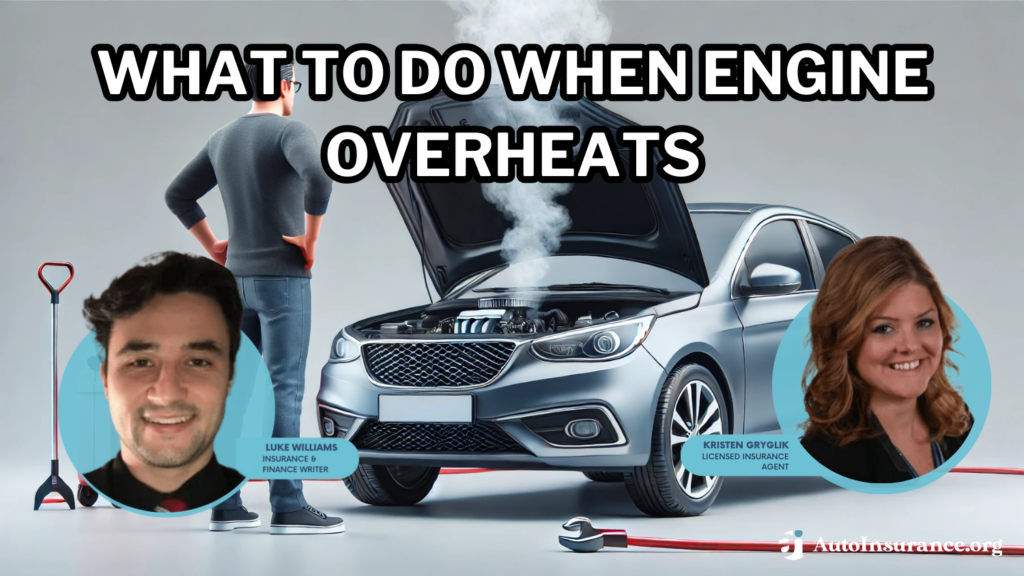
But what do you do when your engine overheats? The signs can be very worrisome, but all you have to do is stay calm and follow this handy guide. Here’s everything you need to know.
- Warnings of an overheating engine include temperature warnings, steam, engine warnings, or an odd smell
- If your engine is overheating, pull over and turn off your vehicle right away
- Adding engine coolant can help bring down the temperature before restarting the vehicle
Step 1: Learn to Recognize The Tell-Tale Signs of an Overheated Engine
Unless you’re a mechanic yourself, it isn’t always easy to tell what’s wrong with your car when you start having issues. Fortunately, an overheated engine comes with some tell-tale indicators.
Your engine is likely overheated if you notice any of these signs individually or in combination:
- Temperature warnings. When your engine overheats, your temperature light should come on. You may also notice a spike in temperature on your engine temperature gauge.
- Steam. Overheated engines usually get a little steamed up. If you notice steam or smoke coming from under the hood of your car, your engine is too hot.
- Odd smell. Leaking radiator fluid, a common cause of overheated engines, has a noticeable, slightly sweet smell.
- Engine warnings. When your engine overheats, your check engine light may also come on or start flashing.
Now that you know what to look for, let’s get into what to do when the engine overheats.
Free Insurance Comparison
Compare Quotes From Top Companies and Save
Secured with SHA-256 Encryption
Step 2: Pull Over and Power Down
If it’s safe to do so, you should pull over right away and shut your overheating engine off. Continuing to let your engine run once it’s overheated can sometimes make matters even worse.
If you can’t pull over right away, make sure the air conditioner is turned off. Running the air-conditioner places undue stress on your car’s cooling system, which in turn can heat your engine up even more.
You should also turn on the car’s heating system. This might seem counterintuitive — how could making your car hotter possibly help in this situation? But the fact is, running the heater can pull heat away from your engine, helping it cool down until you can safely park it and turn it off.
Step 3: Call a Tow Truck
When your car engine overheats, it’s best not to drive the car until you get the situation fixed. Once you’ve pulled over and shut off your car, call a towing company to have your car taken to a mechanic for service. They’ll diagnose the engine damage and problem, quote you an estimate for repairs, and get you back on the road.
What if I can’t get a tow?
If having your car towed is not possible, it doesn’t mean you’re stranded. It’s still important for you to get your car in for service as soon as possible. You may just have to get it there yourself.
Here’s what to do:
- Let the engine cool. As soon as you can, pull over and shut off your car. Let the engine cool for about 15 minutes. The engine temperature gauge on your dash panel will let you know when the engine has returned to an appropriate temperature.
- Call the nearest repair shop. While you’re waiting for your engine to cool down, call the nearest repair shop. Explain the issue and let them know that you’ll be bringing your car in.
- Add engine coolant. Adding coolant to your engine can help bring the temperature down long enough for you to get to a repair shop. If you don’t have any on hand, see if there’s a gas station or auto store within walking distance.
- Restart the car. When the engine has cooled down, start the car and head straight to the mechanic. Pay attention to the temperature gauge and be on the lookout for other signs that the engine might be overheating again. If it does, pull over and shut it off.
If your engine overheats again before you can get to the repair shop, you might have no other choice but to call for a tow.
Get a Free Insurance Quote Today
You rely on your car to get you to all the important places you need to be. Whether it’s for work, for pleasure, or somewhere in between, you need a car that’s reliable and ready to go when you are.
You also need an insurance company that’s prepared to meet all of your individual needs at a price that’s right for you.
Insurance can help you save on things you need when things go wrong with your car unexpectedly, like vehicle recall checks, towing, and repairs.
Frequently Asked Questions
What are the signs that my engine is overheating?
There are several signs that indicate your engine is overheating. Here are the five most common factors:
- A temperature gauge reading in the red zone
- Steam or smoke coming from the engine bay
- A strong smell of burning coolant or oil
- Engine misfiring or running rough
- Dashboard warning lights illuminating
If you notice any of these signs, it’s important to take immediate action.
What should I do if my engine starts to overheat?
If you notice that your engine is overheating, follow these five steps:
- Safely pull over to the side of the road or a safe location.
- Turn off the engine and let it cool down for at least 20 minutes.
- Carefully open the hood to allow heat to escape and visually inspect for any obvious issues such as coolant leaks or broken belts.
- If the engine coolant level is low, add coolant or water if available (once the engine has cooled down).
- Restart the engine and monitor the temperature gauge. If it continues to rise, turn off the engine again and seek professional assistance.
Can I continue driving with an overheating engine?
It is strongly advised not to continue driving with an overheating engine. Overheating can cause severe damage to the engine components, such as the cylinder head gasket, pistons, and valves. Continuing to drive may exacerbate the problem and lead to a complete engine failure, resulting in costly repairs.
Why does an engine overheat?
Engine overheating can occur for a variety of reasons, the top four of which are as follows:
- Insufficient coolant or coolant leak
- Cooling system malfunction
- Blocked or restricted radiator
- Malfunctioning engine components
How can I prevent my engine from overheating?
To prevent engine overheating, consider the following six preventive measures:
- Regularly check and maintain the coolant level according to the manufacturer’s recommendations.
- Inspect the cooling system components periodically and replace any worn-out parts.
- Clean the radiator and remove any debris or obstructions that may hinder proper airflow.
- Ensure the radiator fan is functioning correctly.
- Avoid prolonged idling or placing excessive load on the engine in hot weather conditions.
- If you frequently experience overheating issues, have your vehicle inspected by a professional mechanic to diagnose and resolve the underlying cause.
Related Articles
-
Oct 2024

Worst States for DMV and DOT Data Breaches (2026)
-
Dec 2024
Motorcycle vs. Car Accident Statistics (2026)
-
Oct 2024
Best States for Classic Car Owners (2026)
-
Oct 2024
What age group has the most fatal crashes? (2026)
-
Oct 2024
Safest States for Pedestrians (2026)
-
Oct 2024
Companies Creating Self-Driving Cars (2026)






Get a FREE Quote in Minutes
Insurance rates change constantly — we help you stay ahead by making it easy to compare top options and save.
Secured with SHA-256 Encryption