
Do you have to have auto insurance in every state?
Auto insurance requirements by state can be tricky because each state has different requirements. All but two states have minimum liability requirements that all drivers must meet before getting behind the wheel. New Hampshire and Virginia only require you be able to cover the financial liability of a car accident. In many states, the minimum amount of automobile insurance covered by law for bodily injury and liability is $50,000 and $25,000. Auto insurance laws by state vary, though, and auto insurance rates by state will change along with higher state insurance requirements.
Read more Secured with SHA-256 Encryption





Table of Contents
Table of Contents

Insurance and Finance Writer
Laura Gunn is a former teacher who uses her passion for writing and learning to help others make the best decisions regarding finance and insurance. After stepping away from the classroom, Laura used her skills to write across many different industries including insurance, finance, real estate, home improvement, and healthcare. Her experience in various industries has helped develop both her ...
Laura Gunn

Licensed Insurance Agent
Eric Stauffer is an insurance agent and banker-turned-consumer advocate. His priority is educating individuals and families about the different types of insurance coverage. He is passionate about helping consumers find the best coverage for their budgets and personal needs. Eric is the CEO of C Street Media, a full-service marketing firm and the co-founder of ProperCents.com, a financial educat...
Eric Stauffer
Updated December 2024
With the cost of car insurance rising in many areas, some people may wonder if there is a way around it. Drivers are under the jurisdiction of their individual states when it comes to car insurance, and the car insurance laws by state vary.
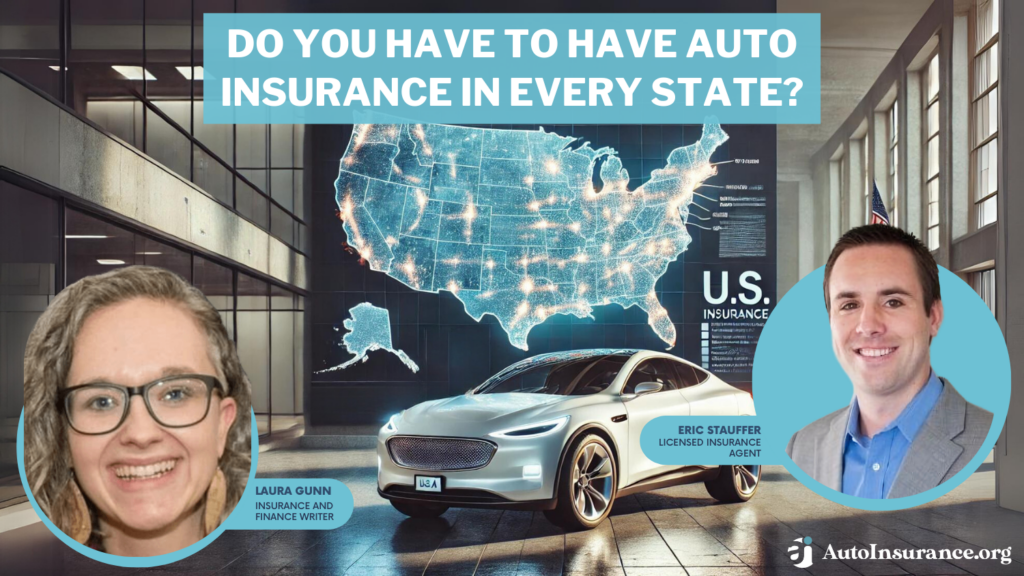
The car insurance requirements by state also vary significantly. It’s important that individual drivers know their rights and responsibilities that they are held accountable for in their respective states. Do all states require auto insurance? Do I have to have auto insurance?
Also, it helps to compare various insurance companies as auto insurance requirements by state vary. Make sure that the coverages offered by the insurance company you choose adheres to state standards and covers the minimums that are expected in their respective state of issuance.
Start comparison shopping today by entering your zip code into our FREE tool above!
- Know the minimum coverage required by law for liability and property damage. For example, in Arkansas, these minimums are $50,000 for bodily image and liability and $25,000 for property damage.
- Different car insurance companies may approach the minimum requirements in different ways, so you should make sure you are getting the minimum required coverage for your state.
- New Hampshire and Virginia are currently the only states that do not require motor vehicle insurance
What are the states that don’t require auto insurance?
So, are there any states that don’t require auto insurance? Yes. There are two states that don’t require auto insurance. New Hampshire and Virginia waive the requirement for owning car insurance, provided you live up to a couple of alternate stipulations.
So what are the minimum coverage for auto insurance in New Hampshire? You are required to satisfy a personal responsibility requirement. You do not have to pay monthly premiums if you can prove the personal responsibility requirements in New Hampshire.
Virginia also does not mandate coverage with auto insurance, but you must purchase uninsured motorist coverage. This coverage ensures that, if you are hit by someone who has no coverage, your car will still be covered in an accident that is not your fault.
If you are willing to relocate to either New Hampshire or Virginia, you do not have to worry about purchasing auto insurance. For most people, however, if they do not already reside in one of the auto insurance-exempt states, they will have to find an insurance company which offers at least the minimums required by law in their state.
So do you need car insurance in every state? No, but it is far from the norm.
Free Insurance Comparison
Compare Quotes From Top Companies and Save
Secured with SHA-256 Encryption
What type of auto coverage is required by nearly every state in the country?
In most cases, there is both a bodily injury and liability amount state minimum auto insurance and a property damage minimum that you are required to have. In many states, the minimum amount of automobile insurance covered by law is $50,000 and $25,000 respectively.
Insurance policies will read like this: 20/40/10. The first number is the minimum amount of liability per person that it covers in an accident for bodily injury or death.
The second number is the maximum it will cover for everyone in total in an accident. The third number is the amount of coverage the policy covers for property damage.
Keeping these three numbers in mind when you are studying insurance policies will help you stay aware of what the policy covers. Then you should compare that to your state required minimums to see if the policy fits your needs.
Other types of coverage
There are other types of auto insurance coverages that you may want to carry. You never know what may be the result of an accident, so it pays to think ahead. Check out the various coverages that each company offers and decide for yourself which one suits your needs.
Medical payments coverage
Med-pay covers the medical expenses that are a direct result of the accident in which you were involved, regardless of fault or liability on the part of the insured driver.
Do all states require collision insurance?
This type of coverage pays for body damage of vehicles which are involved in a covered accident, regardless of the fault. Collision coverage allows the driver to have their vehicle repaired when damage occurs as a result of a collision.
It is important to note that collision coverage is never required by any state. Therefore, you may legally drive without it.
However, some car lender institutions and finance companies require such coverage on vehicles purchased through their finance company, to protect their investment.
It is important that you understand what your finance company’s policy is regarding such things before purchasing an auto insurance policy.
Which states require uninsured motorist coverage?
As stated, Virginia requires uninsured motorist coverage as a minimum for auto insurance coverage because they do not require state liability and personal injury minimums. Uninsured motorist coverage is an optional coverage in other states.
If you are hit by an uninsured motorist, you can still get your insurance company to pay for the damage in the event the other person was not insured.
Likewise, underinsured motorist coverage is also available in cases where the person had insurance but did not have sufficient insurance amounts to cover the damage you incurred from the accident.
What is the purpose of insurance?
Remember that the purpose of insurance is to cover a loss. People pay into insurance every month to fund the insurance company so that the people who need it will have it readily available when the time comes.
If it were not for insurance, there would be a much greater number of lawsuits due to the personal injury, death, or property loss that is suffered each year in auto collisions.
However, most insurance companies will tell you that people rarely carry enough insurance to cover the amount of loss in many cases.
Free Insurance Comparison
Compare Quotes From Top Companies and Save
Secured with SHA-256 Encryption
How much is enough?
While the state minimums are relatively low, you must also ask yourself the question of whether or not it is enough for you. If you were to have an accident where someone was crippled for life, your cost of liability could rise to over $300,000 in total damages if they were to take you to court.
If someone is killed or immobilized, as a result, you could be sued for the rest by the plaintiff if the accident was deemed your fault.
For that reason, many agents recommend minimums more than $100,000 per person and $300,000 per accident.
Shop around and ask an agent how much coverage is a realistic amount for you to have on your auto insurance policy. With auto insurance, one must always weigh the risk of accident and loss with the amount of the premium per month.
Understanding Car Insurance Requirements in New Hampshire
Compare insurance policies to get the best coverage at the best rate. Start by entering your zip code into our FREE comparison tool!
Frequently Asked Questions
Do you have to have car insurance in every state?
So, do I have to have car insurance in every state? Yes, auto insurance is a legal requirement in almost every state in the United States. Each state sets its own minimum coverage requirements that drivers must meet.
What happens if I don’t have auto insurance?
If you are caught driving without auto insurance, you may face penalties that vary depending on the state. These penalties can include fines, license suspension, vehicle impoundment, or even legal consequences. Additionally, driving without insurance leaves you financially vulnerable in case of an accident.
What does auto insurance cover?
Auto insurance typically provides coverage for bodily injury liability, property damage liability, medical payments or personal injury protection (PIP), uninsured/underinsured motorist coverage, and comprehensive and collision coverage. The extent of coverage and specific policy details can vary, so it’s important to review your policy carefully.
Is auto insurance expensive?
The cost of auto insurance can vary based on several factors, including your age, driving history, type of vehicle, coverage limits, and location. Premiums can also vary between insurance companies. It’s advisable to compare quotes from different insurers to find the best rates.
Are there any exceptions to the auto insurance requirement?
Some states may have exceptions for specific situations, such as vehicles that are not in use and stored, or for certain types of vehicles that are not operated on public roads. However, these exceptions are typically limited and have specific criteria.
Related Articles
-
Dec 2024

Is auto insurance considered a utility bill?
-
Jan 2025

Cheap Usage-Based Auto Insurance in 2026
-
Dec 2024
Does auto insurance cover flat tires?
-
Oct 2024
What are SR-22 and FR-44 insurance in Virginia?
-
Dec 2024
Does auto insurance pay if my car is stolen?
-
Nov 2024
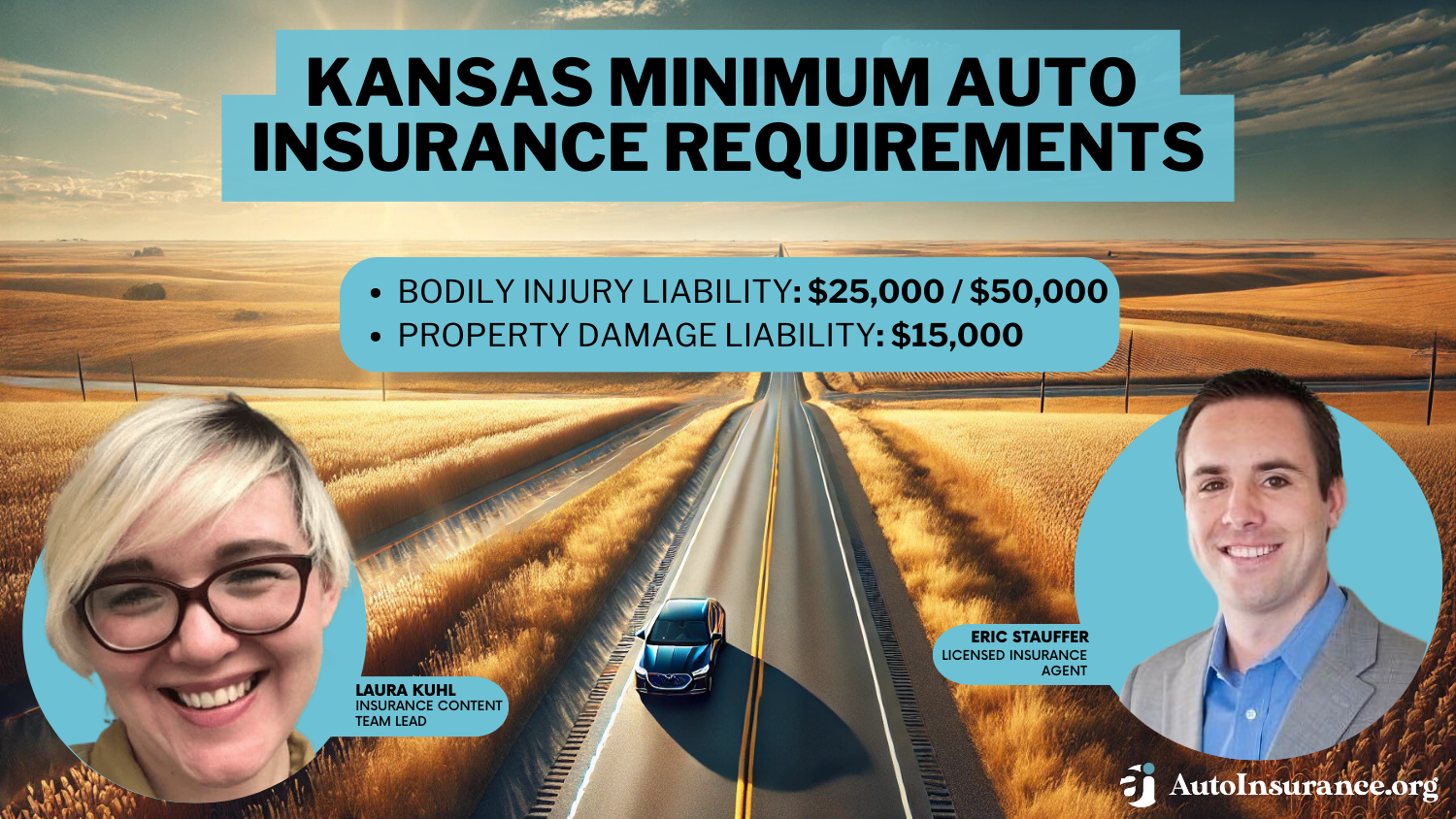
Kansas Minimum Auto Insurance Requirements in 2026 (KS Coverage Details)

Get a FREE Quote in Minutes
Insurance rates change constantly — we help you stay ahead by making it easy to compare top options and save.
Secured with SHA-256 Encryption